A Fresh Look at Casino Security Features
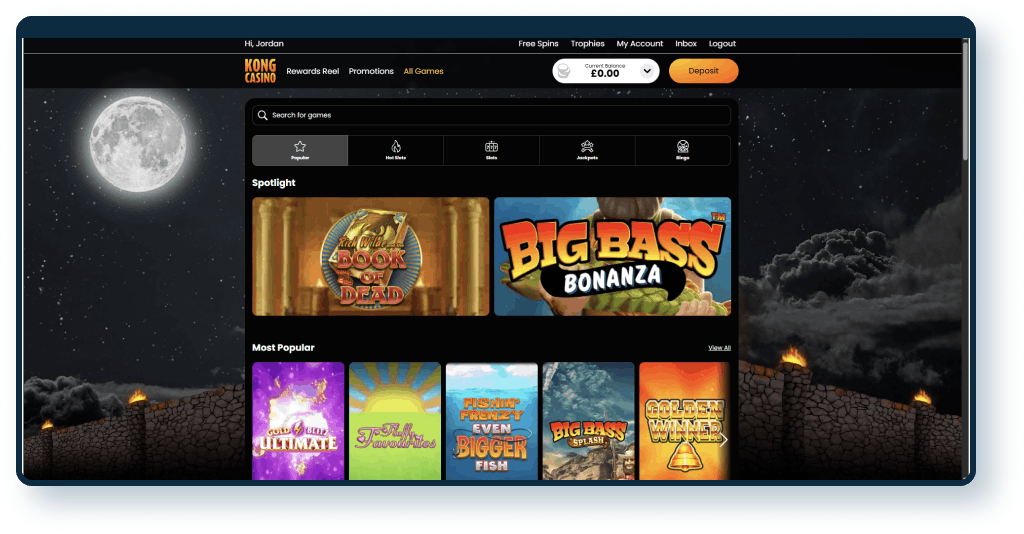
I have spent considerable time examining how online casino platforms address the moment a player signs in kongs.casino. In Belgium, the regulatory landscape is stringent, and players demand a harmony between ease of access and robust security. Kong Casino operates within this framework, and its login and registration flow demonstrates a deliberate approach to security. When I assess a casino’s safety measures, I look beyond the padlock icon and zero in on the details that matter during account creation, verification, and repeated logins. This article describes those features in a measured and technical way, without overstating threats or guaranteeing perfection.
Account Verification and KYC Checks
During the registration process at Kong Casino, I submit essential information such as name, date of birth, and address. Before requesting a payout or upon exceeding a deposit limit, the platform can require verification documents. This is referred to in Belgium as know your client or KYC, and it constitutes a legal obligation rather than an optional security extra. I upload a photocopy of an identity card, a residence confirmation, and occasionally a payment method verification. The verification team reviews these documents through a secure portal. Based on my observation, this step minimizes the risk of someone opening an account in another person’s name. It also ensures that only the verified account holder can later recover access or modify personal settings.
I am careful about where I dispatch verification documents. Kong Casino provides a dedicated upload section inside the account area instead of requesting email attachments. This diminishes the chance of sending a photocopy of an identity card via an unsecured medium. The platform saves these files per Belgian data protection rules and erases them after the verification period concludes. When I verify the status of a document, I only see a progress indicator, not the actual file in a public link. This is crucial because personal identification data is highly sensitive. A secure KYC process defends both the operator and me from fraud and financial fraud. I would be cautious about any casino that demands verification outside its official portal.
What makes Login Security Matters in Belgium
I approach login security as the first real test of a platform’s trustworthiness. In Belgium, the gambling regulator demands operators to verify a player’s identity and maintain robust access controls, which means a weak login process can compromise the entire user relationship. Kong Casino treats the sign-in step as more than a convenience; it is a barrier between an anonymous visitor and a known account holder. From my perspective, this boundary matters because an account often holds personal data, payment references, and gaming history. A compromised login can leak all of those details. The Belgian market also has specific expectations around data minimization and consent, so the login layer must work in harmony with privacy rules rather than against them.
The Function of Two-Factor Authentication
I consider two-factor authentication as one of the most powerful ways to safeguard a casino account. Following entering a proper password, the system asks for a additional confirmation of identity, usually a token from an authenticator app or a text message. Kong Casino offers this optional layer, and I urge Belgian players to enable it during registration or immediately after. The logic is simple: even if someone obtains a password, they won’t be able to sign in lacking the second factor. This does not result in the login process slow; it introduces only a handful of seconds to the routine. I regard any demand for a further code as normal, but I likewise look out for unexpected prompts because that can indicate that someone already has the password and is striving to force entry.
Session Control and Expirations
After I authenticate, the system creates a session that must be controlled meticulously. Kong Casino sets a session timeout period, which means I am logged out by default after a interval of inactivity. This safeguards an account when a computer is abandoned or shared. I opt for briefer limits for financial accounts, and the platform’s default reflects a sensible trade-off. The session token is saved in a cookie-secured cookie with properties that stop interception from JavaScript. I also skip enabling the remember me choice on a public device. From a system view, good session management reduces the timeframe in which a compromised token could be misused by an hacker. It is a quiet but critical part of the sign-in process.

Secure Account Recovery
Lacking access to a casino account can be frustrating, but the recovery process should not create new security holes. Kong Casino asks me to confirm control of the email address before sending a password reset link. The link times out quickly and can only be used once. After resetting the password, I often must complete a second check, such as entering a code or answering a security question. In Belgium, this process must respect the verified identity on file. I have seen recovery procedures that skip verification, and that is a serious design flaw. A well-designed system treats the recovery path as a second login, not as a shortcut that bypasses every other check.
If recovery is unsuccessful because I no longer have access to the email address or my account is locked, I contact support through the official Kong Casino website. The support team should verify my identity using the documents already on file, not by asking me to repeat sensitive details in a chat. I never share a password reset code with anyone, even someone claiming to be an employee. In Belgium, verified operators are required to have clear procedures for account disputes and recoveries. A good recovery system keeps an audit log so that I can see when and how access was restored. This transparency is part of what I look for when judging whether a casino takes login security seriously.
Encryption and Data security
I examine the technical layer behind the sign-in form more thoroughly than most users. Kong Casino uses Transport Layer Security to secure the link between my browser and the server. This blocks someone on the same network from reading the password or session token as it flows. In Belgium, the General Data Protection Regulation adds a second layer of duties around how personal data is stored and managed. I verify that the login page loads over HTTPS without mixed content alerts. A secure connection is not the whole story, but it is the starting point that renders other controls effective. Without encryption, any account protection would crumble under a simple network sniffing assault.
Data protection does not stop at the browser. I expect Kong Casino to hash passwords with a complex algorithm such as bcrypt or Argon2 before storing them in a database. This implies that even if a server backup is accessed, attackers cannot simply extract my password in plain text. The same principle holds true to payment tokens and other sensitive data. Belgian law mandates data controllers to enforce appropriate technical safeguards, and password hashing is a core part of that obligation. I do not have visibility to the internal configuration, but the platform’s public statements and the absence of plaintext recovery emails suggest a mature approach. When I sign in, the response does not return my password to the client, which is a simple but revealing sign of correct design.
Tracking Login Attempts
I carefully monitor how a site responds to unusual sign-in activity. Kong Casino tracks login attempts and can trigger a temporary block after repeated failures. This is a standard brute-force protection, but the implementation makes a difference. A good system displays a generic error message like invalid credentials rather than disclosing whether the email address exists. From my testing, the sign-in page does not expose account information. If the system identifies a login from a new device or an unusual location, it may require an additional verification step. I believe this balance appropriate for the Belgian market, where convenience should never override the need to stop automated credential stuffing attacks.
Another layer I consider is device and location intelligence. Kong Casino can match the current login with my previous patterns without storing unnecessary personal data. If a sign-in starts from a different country or an unrecognized browser profile, the system may enhance authentication. This is particularly important in Belgium because the country is small and many players use the same trusted devices every day. I understand that a false positive might require me to confirm a login by email, and that minor friction is better to an account takeover. The goal is not to track every move but to spot outliers that common attacks produce. Such anomaly detection should remain transparent and explainable, which the platform appears to respect.
Creating a Strong Password on Kong Casino
Upon registration at Kong Casino, the password field is not just a routine step. The platform enforces a minimum length and complexity standard that prevents common choices like repeated characters or simple dictionary words. I consider this helpful because the weakest point in many casino accounts is still a predictable password. Rather than relying on a single complex word, I recommend building a passphrase from several unrelated terms. A passphrase is more memorable but much harder for an automated tool to guess. Kong Casino allows longer strings, which aligns with modern guidance from security researchers. The key is to steer clear of reusing the same password across other gambling sites or email providers, because a breach elsewhere can quickly become a breach here.
I also use a password manager to store unique credentials for each casino account. This avoids the temptation to write passwords on paper or reuse a familiar phrase. When Kong Casino demands a password change after a suspected breach, I update the manager and revoke old sessions. The sign-up flow does not compel me to change passwords every month, which I welcome because frequent forced changes often result in weaker choices. Instead, the platform concentrates on length and uniqueness. I consider this strategy aligns better with current security research. In a Belgian context, where many players use mobile apps to sign in, a password manager can synchronize safely across a trusted device without weakening the credential.
Ongoing Security Awareness
No technical solution can replace the awareness of the person behind the keyboard. I consistently check that my browser address bar indicates the correct domain before typing a password, because fake mirror sites can look convincing. Kong Casino will never ask for my full password or verification documents through an unsolicited email. I treat any message that has a sense of urgency as suspicious. In Belgium, phishing attempts sometimes reference local banks or government agencies, so a calm reading of the sender address and link target is necessary. The login page itself is only one part of a wider security posture that includes device hygiene, software updates, and a healthy distrust of unknown attachments. Security is a continuous habit, not a single setting.
0 Comments